Some links in this piece are affiliate links. If you buy something through one, Little Home Details may earn a small commission, at no extra cost to you. It never changes what ends up in the drawer. How this works.
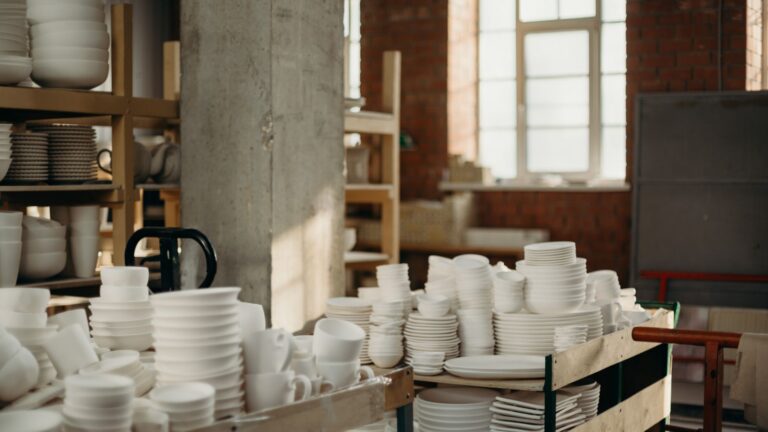
We own eight dinner plates that came as a set, cream colored with a thin gray line near the rim, bought together in a single box the year we furnished this apartment from nothing. They stack neatly, they are identical to the millimeter, and if you laid them all out on the table you would not be able to tell one from another except by the faint variation in how the light catches each one. Mixed in among them, on the same shelf, is a ninth plate that does not belong to the set at all, and it is the one I use more than any of the other eight.
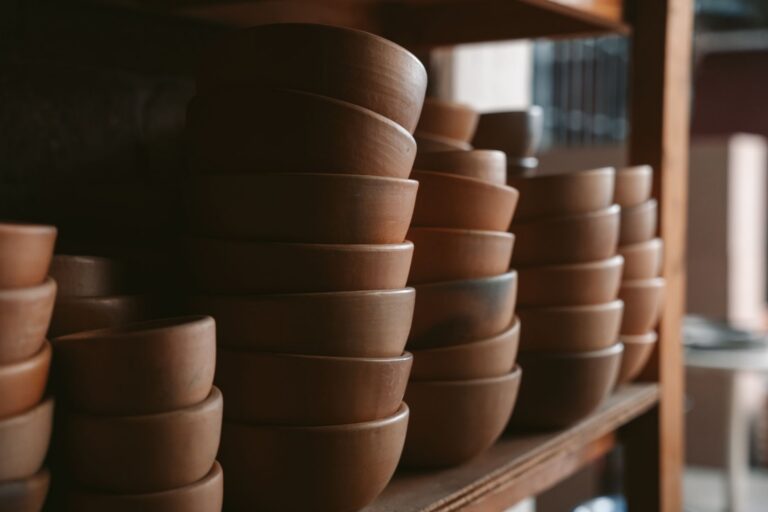
It is slightly wider than the others, glazed in a warm oatmeal color with a visible ridge where the potter trimmed the foot, and the rim is not quite round, it has a gentle, almost imperceptible waver to it that no factory mold would ever produce. I bought it on its own, years after the set, from a small shop that sold work by a local ceramicist, and I remember standing in the shop turning it over in my hands, checking for the maker’s stamp pressed into the underside, before deciding to bring it home.
Why one plate stands out on a set table
When we have people over and I set the table with the matched set plus this odd one filled in wherever it happens to land, I notice that whoever ends up with it almost always mentions it. Not in a complaining way. They pick it up, turn it slightly, run a thumb along the rim, and ask where it came from. No one has ever done that with the other eight, not once, in all the years we have owned them.
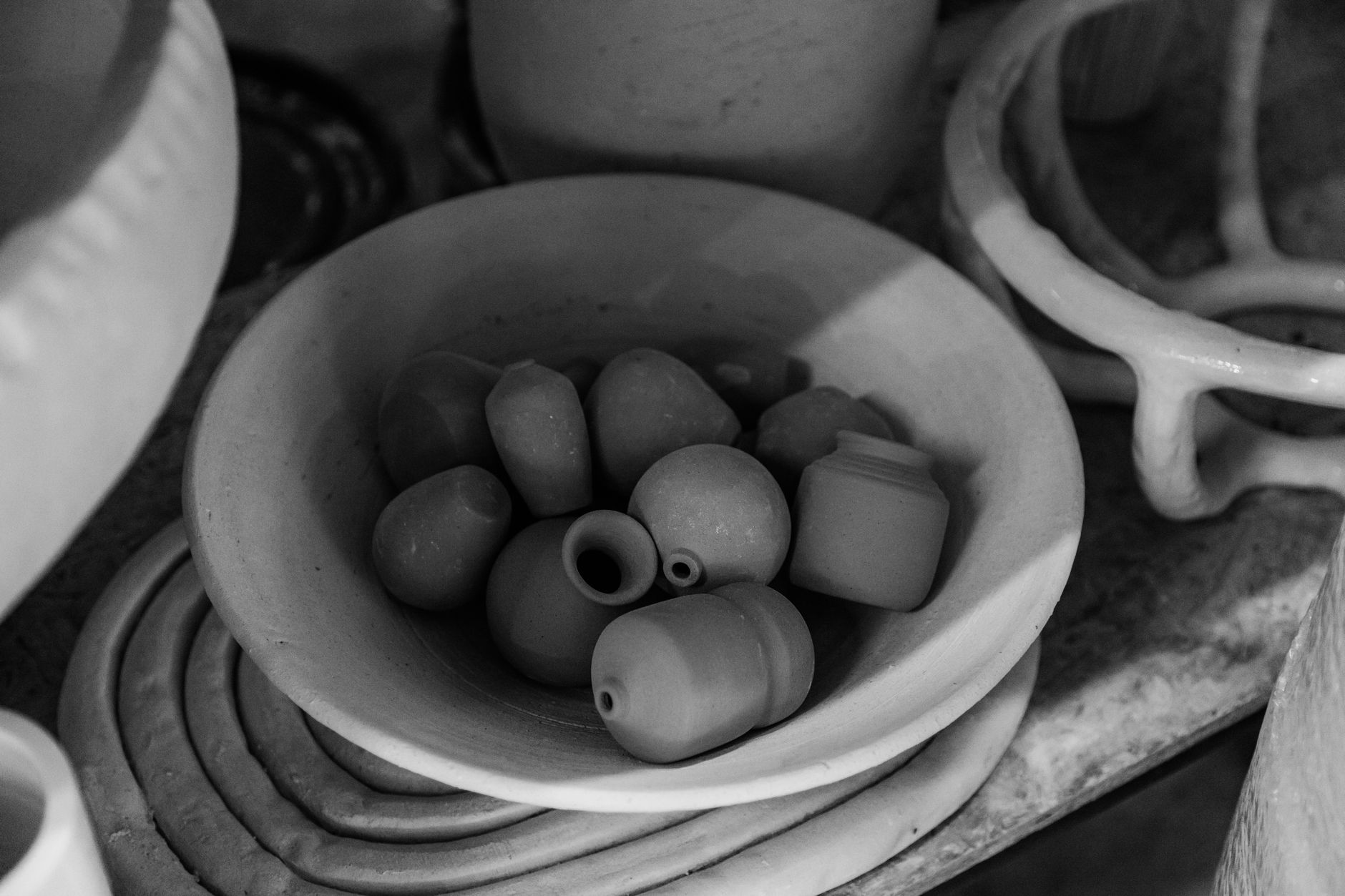
I think the reason is simple enough. The matched plates are competent and quiet. They do exactly what a dinner plate should do, and because they are identical to each other, there is nothing on any single one of them that draws the eye or the hand. The odd plate has a slightly irregular rim, a faint thumbprint pressed into the clay near the edge where the maker’s hand rested during trimming, and food sits on it a little differently because the surface is not perfectly flat.
What I use it for
I have started reserving it, without quite meaning to, for whichever dish took the most effort that evening. Not the everyday pasta, but the roast that took three hours, or the first tomatoes of the season sliced with good olive oil, the kind of meal where I want the plate itself to feel like part of the occasion rather than just a surface. It has become, in our house, an unofficial marker of attention, a plate that says something took a little longer tonight.
My partner once joked that the plate has more personality than the rest of the cabinet combined. He was only half joking.
The practical downside of one odd plate
There is a real cost to keeping a single mismatched piece in an otherwise uniform set, and it is worth being honest about it. It cannot be stacked the same way, since its slightly wider diameter means it sits a fraction of an inch proud of the others in the cabinet stack, and more than once I have had to catch the stack from tipping because of it. If it breaks, there is no replacing it exactly, no manufacturer catalog number to reorder from. It is a one-off, and one-offs do not come back once they are gone.
I have made peace with that risk. I wash it by hand rather than trusting it to the dishwasher with the rest, which is a small extra chore most weeks, but one I do not mind. The plate has earned a slightly higher standard of care than the plates that arrived by the box.
What a full set of matching plates cannot give you
There is nothing wrong with a matched set. Ours does its job well, meal after meal, and I would not want to eat every dinner off eight different mismatched plates collected one at a time, that would start to feel less like a table and more like a rummage sale. But a full set, on its own, has no story built into it. Every plate is interchangeable, and interchangeable objects do not accumulate meaning the way singular ones do.
The odd plate, precisely because it does not match, has become the one piece at our table that people notice, ask about, and remember. It is a small, plain example of something I think is true more broadly about a table setting. Sameness is restful, but it is the exception in a stack of sameness that actually gets looked at.