Some links in this piece are affiliate links. If you buy something through one, Little Home Details may earn a small commission, at no extra cost to you. It never changes what ends up in the drawer. How this works.
The basket by the back door had been holding mail, dog leashes, and a spare set of keys for about six years before one of the side stakes finally split. I noticed it on a Tuesday morning, reaching in for the leash and feeling the whole side give a little, the way a stair tread gives when the wood underneath has started to go soft. I set the basket on the kitchen table under the good light and looked at it properly for the first time in years.
What had failed was a single vertical stake, one of the ribs that runs from the base up through the weave to the rim. It had cracked along the grain about four inches up from the bottom, not broken clean through but split enough that the whole side sagged when weight pressed on it. The willow around it was still fine. Wicker rarely fails all at once. It goes at its weakest point first, usually a stake that got soaked once and dried too fast, or one that took the brunt of being kicked under a bench for years.
Soaking Before Anything Else
I have learned, mostly by doing it wrong the first time, that you cannot repair dry willow. It snaps instead of bending. So the basket went into the bathtub with a few inches of warm water for about twenty minutes, just the damaged section submerged, while I sat on the closed toilet lid reading the back of a shampoo bottle because I had not thought to bring anything else in with me. The willow needs to drink before it will cooperate. You can tell it is ready when you flex a nearby stake gently and it bends rather than resists.
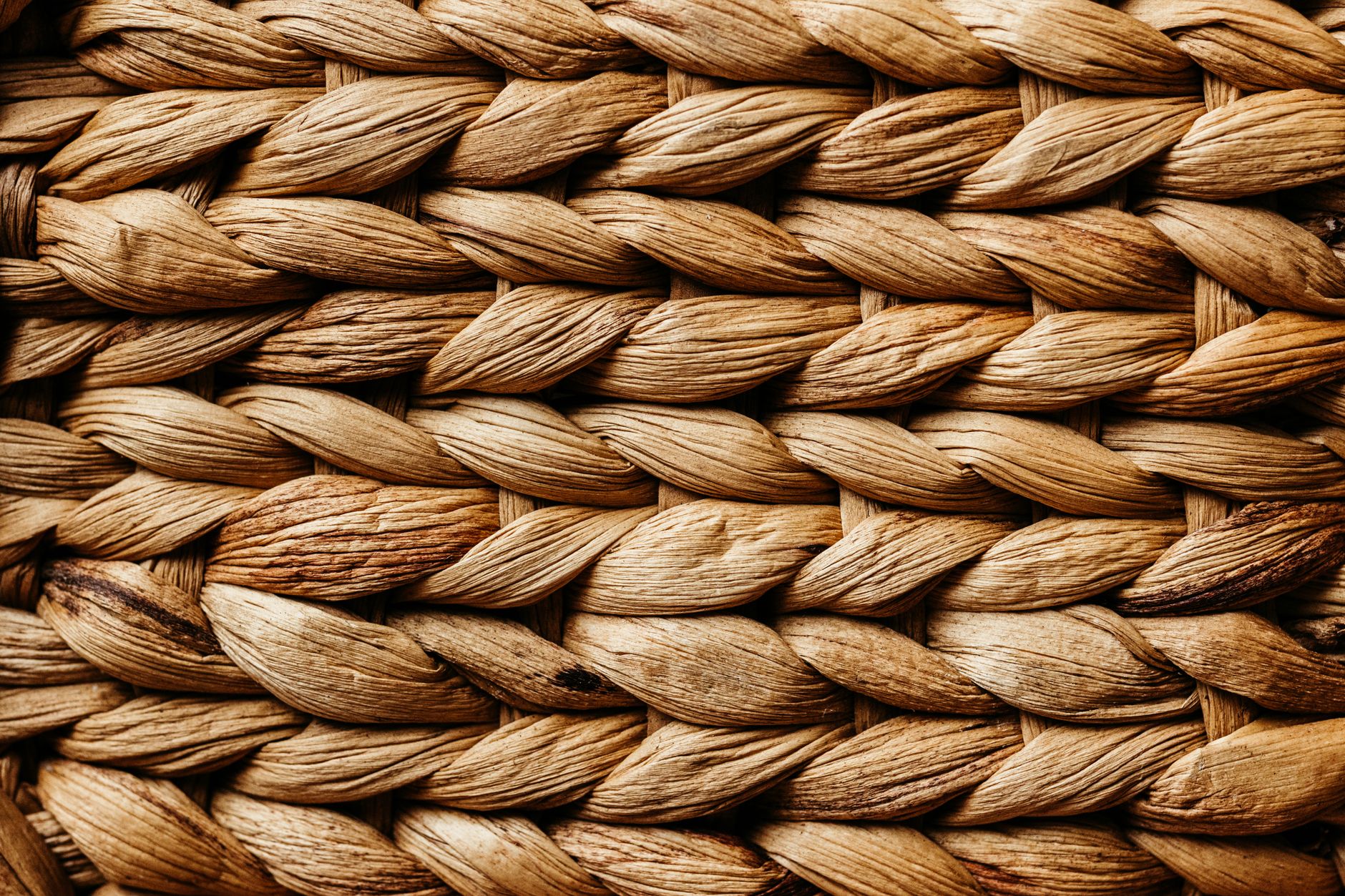
The actual repair was less delicate than the soaking made it feel. I cut a new length of reed, slightly thicker than the original stake so it would hold, and worked it in alongside the cracked one rather than trying to remove and replace, which on a basket this tightly woven would have meant unpicking rows I did not want to unpick. The new stake got threaded down through the same over-under pattern as its neighbor, following the rhythm the weaver had already set, and its top end got tucked back into the rim binding where the old stake’s end was still anchored.
A repaired basket does not look new again. It looks like a basket that has been used long enough to need help, which is a different thing entirely, and I think a better one.
What surprised me was how much the tension of the weave depends on stakes that are still doing their job elsewhere. Once the new reed was in place and I pushed the whole side gently to test it, the basket felt more solid than it had in months, not because one stake fixed everything but because the surrounding weave had been quietly compensating for the weak point and could finally stop.
What Actually Fails in a Basket
Most of the failures I have dealt with over the years fall into three categories. The stakes, which are the structural verticals and take the real stress of lifting and setting down. The weavers, the horizontal strands that give the basket its pattern and are more decorative than load bearing, though a loose weaver looks worse than it actually is structurally. And the rim, which is the binding that finishes the top edge and is usually the first thing to fray because it gets gripped every single time the basket is picked up.
A frayed rim is the easiest repair and the one I would tell anyone to start with if they are nervous about trying this at all. It is mostly cosmetic, mostly forgiving, and it teaches you the soak-and-bend rhythm without any risk to the basket’s ability to hold weight.
What the Basket Holds Now
I put the leashes and the mail back in once the repair had dried for a full day. The basket sits slightly differently now, a little more upright on that side than the sagging I had gotten used to without noticing. My husband asked if I had bought a new one. I had not, and telling him so felt disproportionately satisfying, the kind of small domestic pride that does not translate well when you try to explain it out loud.
There is a particular logic to what belongs in an open basket by a door, and it has nothing to do with categories and everything to do with how often a thing gets grabbed without looking. Leashes, yes. Reusable bags, yes. Anything that needs to be found by feel in the dark while holding a coffee cup in the other hand. The basket is not storage in the organizational sense. It is more like a shelf that happens to have sides, forgiving of things dropped in at an angle, unbothered by a slightly wet umbrella tucked along one edge.
I think about the stake that split every time I reach in now, which is not a bad thing. It reminds me that the basket is a made object, assembled by someone’s hands from plant material that was alive not long before, and that it will keep asking for small attention over the years the way anything actually used tends to. The alternative, replacing it with something plastic that will not crack but also will not age into anything, has never once tempted me.