Some links in this piece are affiliate links. If you buy something through one, Little Home Details may earn a small commission, at no extra cost to you. It never changes what ends up in the drawer. How this works.
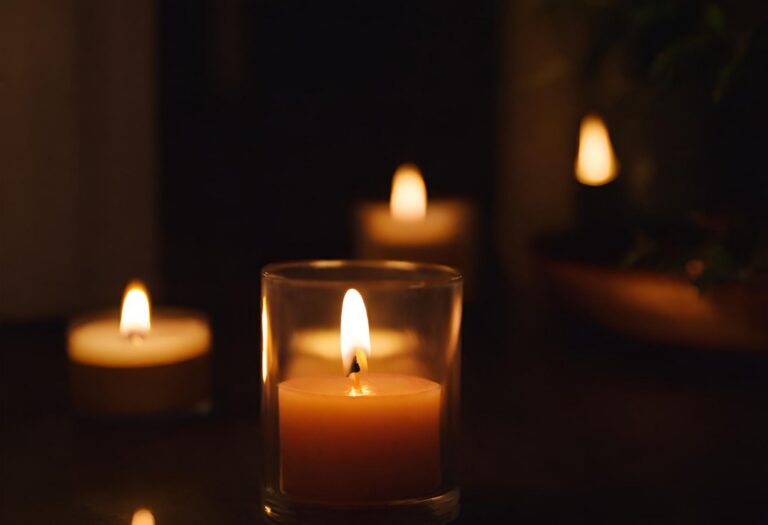
I blew out the candle on the side table around nine and forgot about it until the next morning, when the smell was still there, thinner than the night before but somehow more specific. It was not the bright top note of the candle itself anymore, the citrus and cedar the label had promised. It was something underneath that, a little smoky, a little like a match head, clinging to the curtain closest to the table and to the wool throw folded over the arm of the chair.
I have started paying attention to that leftover smell more than the burning smell, which seems backward given how much thought goes into picking a scent in the first place. But the burning smell is temporary and a little performative. It is the smell you notice when you walk in the door and want the room to say something. The smell that stays in the fabric after the flame is gone is the one that actually becomes part of the house. It is there in the morning when the sun comes through the same curtain and warms it slightly, releasing a version of the scent that never showed up while the wick was lit.
The difference between snuffing and blowing
For a long time I blew out every candle the same way, a quick breath from the side, and never thought about why some evenings the smoke smell was sharp and lingered for an hour, while other nights it disappeared in a few minutes. It turns out how you put a candle out changes what it leaves behind. A hard blow scatters the hot wax vapor and pushes more smoke into the air right at nose height, which is why a room can smell like a doused campfire for a while after. Dipping the wick into the melted wax pool with a toothpick or the back of a spoon and pulling it back up coated puts the flame out with almost no visible smoke at all. I learned this by accident one night when I did not have a snuffer and improvised with a butter knife, and the room stayed quiet, no smoke smell drifting into the hallway.
I do not always bother with the careful method. Some nights I want the small ceremony of blowing it out, the little curl of smoke, the smell that says something just ended. But when I am lighting a candle in a room where I actually want the scent to hold, in the bedroom before sleep, I have started using the dip method instead, and the room in the morning smells like the candle chose to stay rather than leaving in a hurry.
Fabric remembers longer than air
The wool throw on that chair has held a version of three or four different candles over the winter, layered in a way I cannot fully separate anymore. There was the vanilla one from my sister for my birthday, then a cedar one I bought because the store smelled so good when I walked past it, then something with clove that I only burned twice because it gave me a slight headache. All of that sits in the fibers now, faint, mixed, more interesting than any single one of them would be on its own. Cotton curtains do something similar but let go of it faster, maybe because they hang open to more air during the day. The throw sits folded most of the time, closed in on itself, holding the smell in.
I have started to think of certain textiles in the house as slow recorders of scent the way a diary keeps a record of days. The chair by the window has become the place that smells most like winter evenings here, not because I light candles anywhere else, but because that fabric happens to be positioned to catch what the candle gives off and to keep it longer than the open air of the room does.
Where I will not let a candle burn unattended
That same side table sits close enough to the curtain that I never leave the room with the candle still lit, not even to answer the door or check something in the kitchen. The curtain moves more than I would like when the window is cracked, and a candle left going while I am out of the room is not worth the convenience of not walking back to blow it out. It is a small rule I keep without much drama about it, the same way I keep the good knives out of the drying rack overnight. Nothing has ever gone wrong. That is sort of the point of the rule.
What stays with me at the end of a candle, once the wax is a shallow disc and the wick has gone black and short, is less about the scent itself and more about what the evening was doing while it burned. The cedar one marked the week it rained for four days straight. The vanilla one is tangled up with a phone call from my sister that ran long. The house holds these things in its fabric a little longer than I hold them in my memory, which might be the whole reason I keep lighting them.