Some links in this piece are affiliate links. If you buy something through one, Little Home Details may earn a small commission, at no extra cost to you. It never changes what ends up in the drawer. How this works.
There is a paperback on my nightstand with a spine so worn it has split clean into two sections, and the split happens to fall right at the page where the story’s whole shape changes. I did not plan this. Nobody plans this. A spine cracks where a book has been opened most often, and mine, for whatever reason, always opens itself to that page now, the way a door with a bad hinge always swings the same direction.
I used to think a cracked spine was something to be ashamed of, evidence that I had not taken care of a book properly. My mother kept her books pristine, spines unbroken, dust jackets still crisp decades later, and for a long time I measured my own shelf against hers and felt like I was doing something wrong every time I bent a cover back too far reading in bed.
What wear actually records
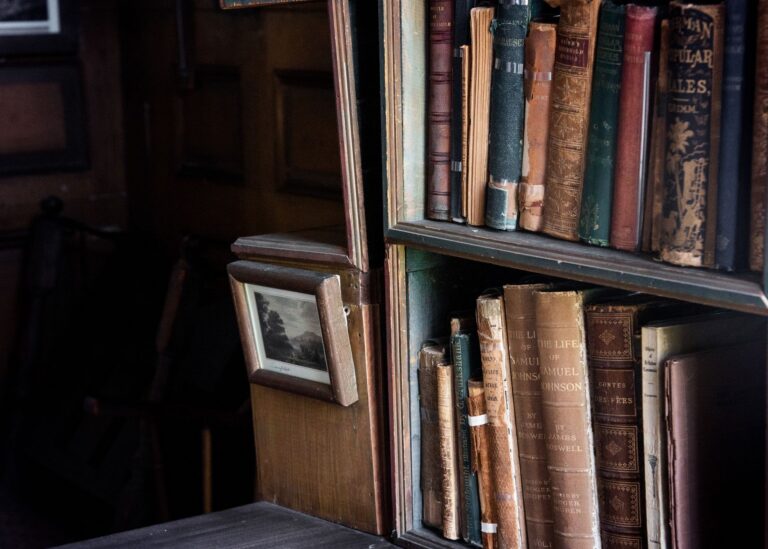
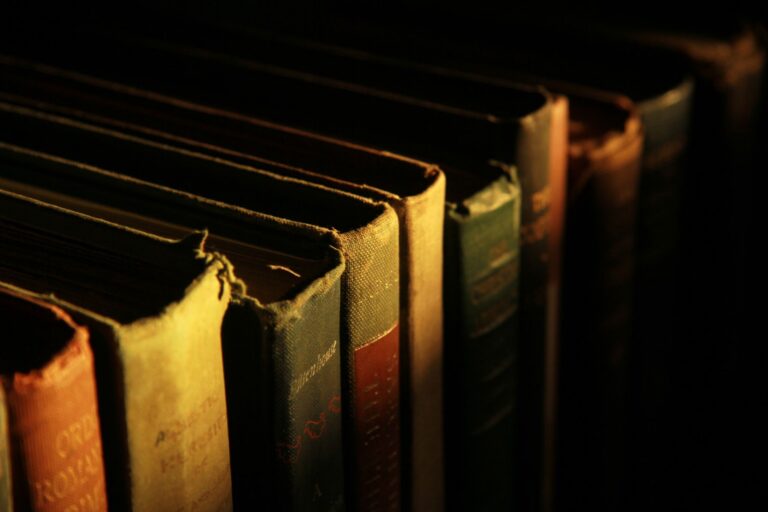
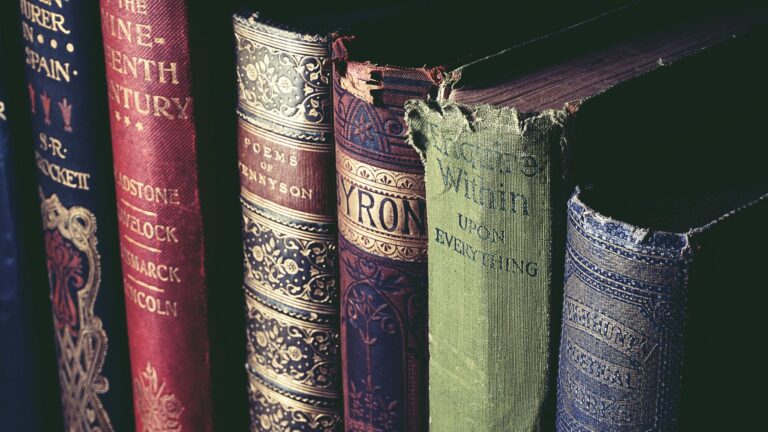
Then I noticed that I could tell, just by looking at the spine of any paperback on my shelf, roughly how much I loved it. The ones that lie flat and open on their own, pages slightly yellowed at the edges where my thumb rests, are the ones I have read more than once. The ones with stiff, unbroken spines are mostly books I own because someone recommended them, books I read once dutifully and then shelved without much feeling.
A cracked spine is not damage in the way a stain is damage. It is closer to a record, the physical shape of a book slowly conforming to the way a particular person holds it. My copy of that paperback on the nightstand bends open exactly to page one hundred forty, where the narrator makes a decision that changes the rest of the story, and I have read that page probably twenty times just by opening the book and letting it fall open on its own.
A book that has never been reread looks the same as the day you bought it. That is not always a compliment.
The books that do not survive this
Not every book earns a graceful crack. Some just fall apart, glue drying out and pages coming loose one at a time until you are reading with a rubber band around the whole thing to keep the last twenty pages from sliding onto the floor. I have one like that, a used copy of a novel I bought for almost nothing at a library sale, already secondhand when it came to me, and it has now lost about a dozen pages to the process of just being read. I keep the pages in an envelope tucked inside the front cover, in order, in case I ever want to reassemble it properly, though I doubt I ever will.
There is a difference between a book that ages well and one that just deteriorates, and I do not think it has much to do with the quality of the binding. Some cheap paperbacks from used bookstores have outlasted hardcovers I bought new, and I think it has more to do with how a book was made in the first place, glue versus stitching, cheap paper versus something with a little more fiber to it, decisions made decades ago by people I will never know anything about.
Living with the wear instead of against it
I stopped trying to keep my paperbacks looking new a few years ago. I still handle hardcovers carefully, especially the older ones, because a torn dust jacket cannot really be undone. But paperbacks I read in the bath, on the porch, in bed with the cover bent back flat against itself, and I have made peace with what that does to them over time. The spine on the nightstand book will probably split further eventually, the two halves separating a little more each time I open it, until one day it might come apart at that crease entirely. When that happens I will probably just keep reading it in two pieces rather than replace it. The copy has become specific to me in a way a fresh one from the store would not be.
I think about my grandmother’s cookbook sometimes in relation to this, a book I do not personally own but remember from her kitchen, spine gone soft and stained, certain pages splattered enough that you could tell which recipes she actually cooked and which ones she never got around to. That is the kind of wear I want on my own shelf now, the kind that tells on you a little, that shows which pages you kept coming back to and which ones you barely touched. A pristine shelf looks nice in a photograph. It does not tell you anything true about the person who owns it.